

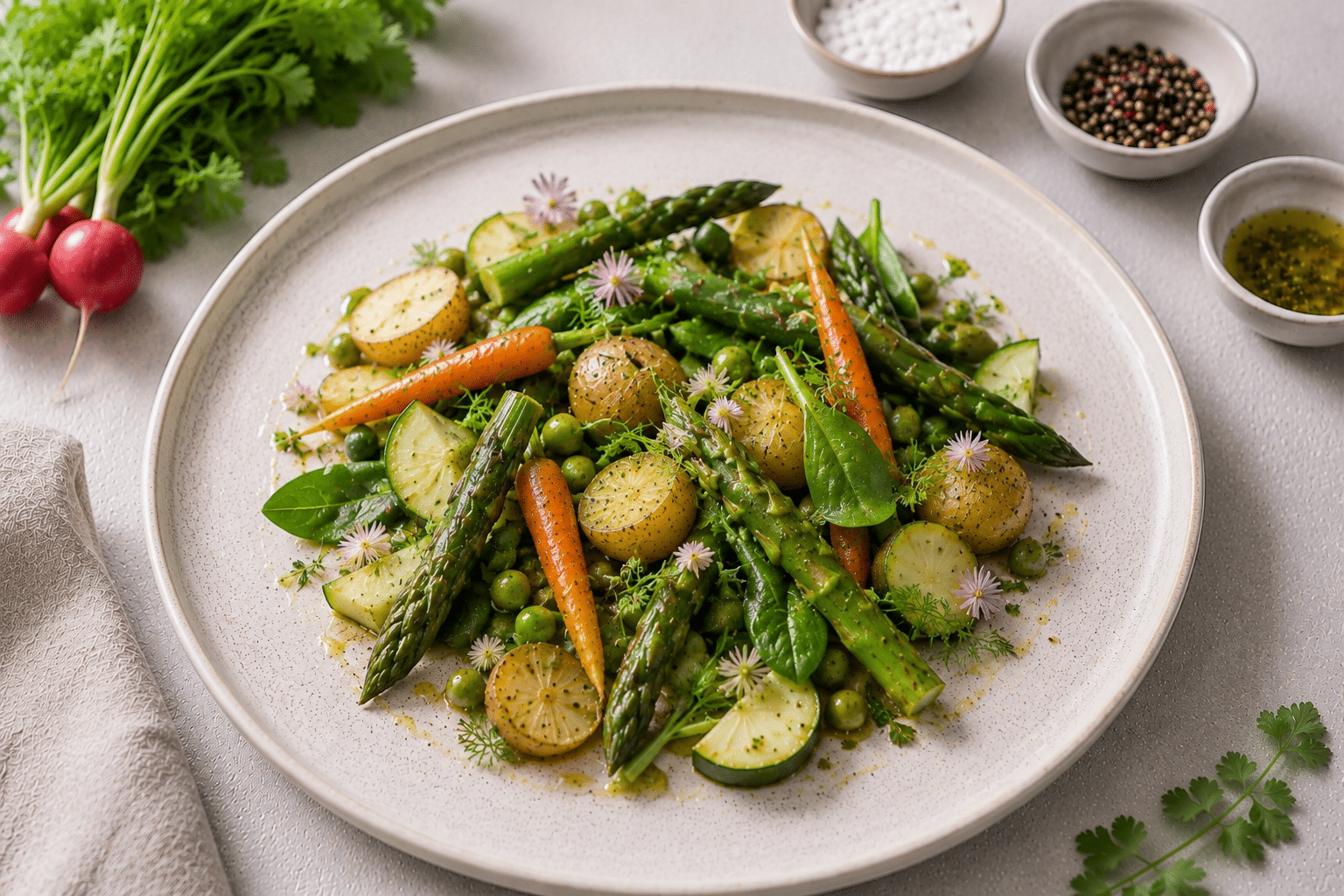
In plant-based cuisine, vegetables are the starting point from which the entire dish is built. They determine the structure of the plate, its balance and its identity. They make it possible to work on creative and colourful plant-based dishes.
Vegetables offer many advantages and allow restaurants to develop a distinctive culinary signature connected to a specific territory and seasonality. Each vegetable follows its own rhythm, texture and way of being prepared, guiding the Chef’s culinary choices according to their sensitivity and inspiration.
Vegetables therefore establish themselves as ingredients in their own right, whose gastronomic potential is revealed through careful observation and respect for the product, precision of gesture and coherence of flavours.
Choosing and understanding vegetables in plant-based cuisine
The work of vegetables begins with their selection, and the quality of the product directly determines the final result on the plate.
The choice of a vegetable is part of a broader culinary reflection, linked to the role it will play within the dish. A vegetable may provide structure, create binding, introduce freshness or contribute to the overall balance of the composition.
The construction of the dish relies on the way ingredients interact with one another. One main vegetable may structure the plate, while others complement the composition by bringing moisture, lightness or variations in texture. Balance emerges from this complementarity, giving the plate clarity and coherence.
The choice of supplier, geographical proximity and the relationship with the producer also contribute to this understanding of the product. A reliable supply chain makes it possible to adjust recipes with precision and maintain consistent quality.
Rethinking the place of vegetables on the plate
In traditional cuisine, vegetables have long been considered a side element intended to complement a main component, often built around an animal protein. This structure has had a lasting influence on menu design and on the hierarchy of elements within the plate.
In plant-based cuisine, this hierarchy disappears and the vegetable becomes the central element around which the dish is built.
This evolution of the plate, which many Chefs have begun to embrace, requires an understanding of the different vegetable families and of their role in cooking.
Depending on the desired result, vegetables are approached differently. Some bring density and structure, while others, with a higher water content, contribute freshness and juiciness. Combining these vegetables makes it possible to conceive creative dishes in which every element contributes to the overall balance of the dish.
Cooking with vegetables therefore begins with a shift in perspective, which consists in designing the dish around the vegetable itself and drawing on the Chef’s creativity to reveal its full potential.
Vegetables as the Stars of the plant-based dish
Within this approach, dishes are now built around vegetables, which become the true starting point of the composition.
Vegetables act as catalysts. They become the Star of the dish, taking centre stage to reveal their aesthetic and flavour qualities.
This creative work also involves organising ingredients in order to build a coherent and balanced plate. The diversity of vegetables makes it possible to work with several dimensions, including textures, colours, temperatures and flavour intensity.
The combination of these elements creates rhythm within the plate by alternating sensations and balancing flavours to avoid monotony. Balance relies on the way ingredients interact with one another to form a coherent and readable whole.
Plating also plays a decisive role. The visual construction of a plant-based dish relies on a precise management of volume and colour contrast. Vegetables help structure the space, create relief and attract the eye. Their presentation, cutting techniques and positioning on the plate all contribute to the first perception of the dish and influence the customer’s overall experience.
This enhancement extends to menu descriptions, which increasingly highlight the vegetable itself, and sometimes even its producer and origin.
Beyond the culinary aspect, repositioning vegetables also requires rethinking the way dishes are presented to guests through a service discourse that values plant-based cuisine as a whole. The choice of words on the menu, the emphasis placed on the product and the mention of its origin all directly contribute to the perceived value of the dish.
Plant-based cuisine guided by respect for living
Vegetable cuisine is deeply connected to the rhythm of the seasons.
Each period of the year brings vegetables with distinct characteristics, which influence the way they are prepared in the kitchen.
This relationship with living things is expressed through respect for the product, its terroir and its natural cycle. It encourages Chefs to consider vegetables as a whole and to accompany them thoughtfully from farm to plate.
This perspective encourages simple and measured gestures, adapted to the vegetable in its original state, in order to preserve its nutritional qualities and reveal its full potential.
Kitchen work constantly adapts to the characteristics of the available produce. Variations in size, texture and flavour intensity influence cutting techniques, cooking methods and ingredient pairings. This ability to adapt makes it possible to maintain a consistent balance on the plate.
The work of Chef Alain Passard perfectly illustrates this vision. His cuisine is built on a direct relationship with the product and on a refined understanding of vegetables, which become the focal point of his plant-based plates.
Techniques adapted to vegetable cuisine
Working with vegetables also involves a wide variety of culinary techniques.
The same vegetable can be prepared in different ways depending on the desired result and the expression the Chef wishes to give it. It may be roasted, candied, served raw, fermented or transformed into a purée. Each technique modifies its texture, flavour concentration and mouthfeel, opening the way to multiple interpretations around a single ingredient. This diversity allows the same product to appear in several forms throughout a menu.
Parts of vegetables that are often overlooked, such as tops or peels, can also be used in cooking. They enrich preparations by bringing complementary aromas, texture or depth to broths, sauces and garnishes. This diversity of uses creates practical opportunities to renew menus and offer more complete plates by working with the same vegetable in different forms.
Cooking methods also play a decisive role in the expression of vegetables in cuisine. They directly influence texture and the way vegetables integrate into the plate. The choice of cooking techniques depends on the role of the vegetable within the composition and on the sensations the Chef wishes to create during tasting.
The value of vegetables in a low-carbon cuisine
Vegetable cuisine naturally fits within a low-carbon approach due to the lower environmental impact of plant-based products compared to animal-based ingredients.
Using seasonal, local or short supply chain products helps reduce transportation and storage needs while ensuring better nutritional quality.
Working vegetables in their entirety also helps reduce food waste. This increasingly widespread practice contributes to lowering the carbon footprint. Different parts of the same vegetable can be incorporated into several recipes, extending the use of the product and fully exploiting its potential.
This organisation also improves kitchen efficiency. A single product can be used across several preparations, facilitating stock management and optimising food costs while simplifying kitchen operations.
This approach responds to growing customer expectations regarding environmental issues while helping establishments build a more sustainable and responsible offer. It also allows restaurants to align their cuisine with current concerns around product origin, seasonality and waste reduction, while strengthening the establishment’s image.
Vegetables in support of our health
Vegetables play a central role in nutritional balance and contribute to maintaining good health.
Rich in fibre, vitamins, minerals and antioxidants, they support the proper functioning of the body while providing satiety. Their diversity makes it possible to vary nutritional intake while creating nourishing and balanced plates.
Chefs often work with a single vegetable to create elegant plant-based plates built around one ingredient. Particular attention must nevertheless be paid to the variety of ingredients included in plant-based dishes in order to ensure optimal nutritional balance. Vegan customers especially seek satisfying dishes capable of covering essential nutritional needs. Combined with cereals and legumes, vegetables offer a particularly interesting nutritional balance for this type of clientele.
This complementarity between ingredients makes it possible to offer complete plates that are both satisfying from a gastronomic perspective and adapted to nutritional expectations.
Training teams in vegetable cuisine
Developing a plant-based offer requires teams to build both technical skills and a deeper understanding of the product itself.
Mastering cutting techniques, cooking methods and ingredient pairings requires structured learning.
Training teams helps ensure consistency in dish creation and encourages the evolution of culinary practices towards a more precise cuisine adapted to working with vegetables.
To support this learning process, the Institut de la Gastronomie Végétale offers an online training programme in French, designed to help professionals develop their plant-based offer.
We also provide awareness workshops on plant-based gastronomy for hospitality and restaurant teams, which can be complemented by practical vegetable-focused cooking workshops.
Conclusion
Vegetables are an essential foundation of plant-based cuisine. Their diversity, seasonality and nutritional richness make them valuable allies for creating balanced and flavourful dishes.
Their simplicity, rooted in their natural origin, offers a particularly rich field for culinary expression. Vegetables make it possible to work with raw, natural ingredients while opening the way to creative and even innovative approaches.
To go further and fully explore the potential of vegetables, discover our Guide “Les Ingrédients phares de la cuisine végétale” (in French). This publication offers a detailed exploration of each ingredient, along with practical advice on integrating them into recipes in creative and nutritious ways. An essential resource for any Chef or plant-based cuisine enthusiast wishing to diversify and enrich their menu with healthy and delicious options.
